The Everyman
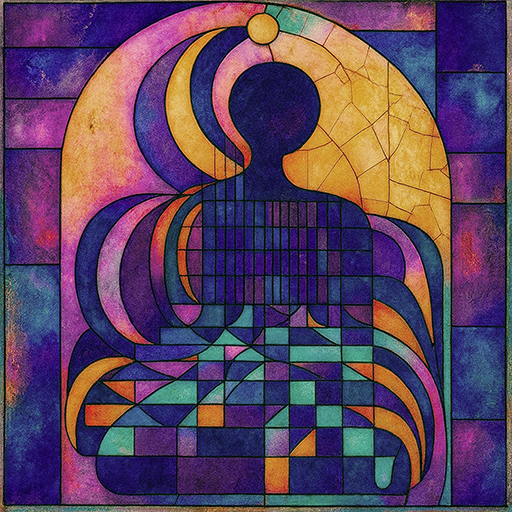
Primary Seed: "Entropy" aligns with the Everyman archetype, symbolizing the gradual unraveling of order and the inevitability of chaos within ordinary life. In this artwork, the central figure, composed of fragmented lines and broken structures, represents the Everyman's journey through the natural process of decay and disarray, illustrating how entropy touches all aspects of existence.
In The Everyman, entropy is depicted through fractured and disjointed patterns overlaying the figure and the surrounding space. The grid-like structure that appears to dissolve or break apart over the figure’s form symbolizes the erosion of stability and the gradual decline of order that even the most grounded individuals experience. This process reflects the Everyman’s role as a witness to life's impermanence, embodying resilience amid disintegration.
The surrounding abstract forms, with their curving lines and broken shapes, evoke the chaotic forces that creep into daily life, reminding viewers of the inevitable decline present in all things. The checkerboard pattern beneath the figure, traditionally associated with structure and control, appears disrupted and uneven, further emphasizing the theme of entropy. This suggests that no matter how carefully one constructs a life, disorder is an inescapable reality.
The cracked arch encircling the figure signifies both protection and vulnerability, as if the Everyman is sheltered but not immune to the encroaching effects of time and change. The cracks in the background hint at the passage of time, reminding the Everyman of the fragility of structures, routines, and certainties. In Jungian terms, entropy here represents the dissolution of the ego and the breaking down of fixed identities, pushing the Everyman toward acceptance and adaptability.
The simplicity of the Everyman’s form reflects an essential universality—this experience of entropy, of life gradually breaking down, is one shared by all. The artwork captures the Everyman’s quiet strength in facing the inevitable, showing how the acceptance of entropy is a fundamental part of the human journey.
Through these elements, The Everyman illustrates entropy as a universal process that impacts everyone, regardless of status or strength. This artwork underscores the Everyman’s quiet courage in accepting the changes and breakdowns that come with time, portraying entropy as a humbling yet profoundly human experience.
For Kayle
Description of The Everyman
The Everyman embodies belonging, humility, and empathy, symbolizing the importance of community, shared experiences, and the value of living an honest and straightforward life. Grounded in practicality and common sense, The Everyman represents the everyday individual who connects with others through simplicity and compassion.
The Everyman represents the desire to belong and connect with others, symbolizing the importance of community, inclusivity, and shared experiences. The simplicity and humility of The Everyman highlight the value of living an honest and straightforward life, free from pretension or arrogance. Grounded in common sense and practicality, The Everyman approaches life’s challenges with a level-headed and pragmatic attitude.
However, The Everyman can also symbolize the potential for conformity and mediocrity, representing the risk of losing individuality in the pursuit of fitting in or avoiding conflict. The fear of rejection or exclusion is another aspect of The Everyman, symbolizing the anxiety of not being accepted or valued by others.
Characteristics of The Everyman
Belonging: The state of feeling connected and included in a community or group, fostering a sense of unity and shared experience.
Empathy: The state of understanding and sharing the feelings of others, fostering compassion and solidarity.
Humility: The state of living simply and honestly, free from pretension or arrogance.
Challenges Faced by The Everyman
Conformity: The state of sacrificing individuality to fit in or to avoid conflict, leading to a loss of personal authenticity.
Fear of Rejection: The state of being anxious about not being accepted or valued by others, leading to insecurity or self-doubt.
Mediocrity: The state of settling for average or uninspired outcomes, leading to a lack of ambition or excellence.
Symbolic Imagery Associated with The Everyman
Crowds and Gatherings: The symbols of community and connection, representing The Everyman’s desire to belong and to share experiences with others.
Simple Clothing: The symbols of humility and simplicity, representing The Everyman’s commitment to living an honest and straightforward life.
Tools and Everyday Objects: The symbols of practicality and common sense, representing The Everyman’s ability to approach life’s challenges pragmatically.
Dreaming of The Everyman
Belonging and Connection: Dreaming of The Everyman often symbolizes the dreamer’s desire for belonging and connection, reflecting their need to feel included and valued in their community or relationships.
Conformity and Mediocrity: A dream of The Everyman might reflect the dreamer’s experience of conformity or mediocrity, indicating a need to assert their individuality or to strive for excellence.
Simplicity and Humility: The Everyman in a dream may represent the dreamer’s appreciation for simplicity and humility, focusing on living honestly and authentically.
Cultural References Aligned with The Everyman
Year: ~475-221 BCE
Title: Confucian Analects
Author: Confucius
Quote: “The strength of a nation derives from the integrity of the home.”
Explanation: Confucius’s teachings highlight the Everyman archetype through the importance of family and social harmony. He suggests that everyday actions rooted in kindness and respect shape a better world.
Year: ~180 CE
Title: Meditations
Author: Marcus Aurelius
Quote: “That which is not good for the beehive cannot be good for the bees.”
Explanation: Marcus Aurelius reflects the Everyman archetype by emphasizing the importance of collective well-being. His philosophy suggests that individual happiness is tied to the health of the community.
Year: 1931
Title: The Good Earth
Author: Pearl S. Buck
Quote: “And roots, if they are to bear fruits, must be kept well in the soil of the land.”
Explanation: Wang Lung’s life as a humble farmer reflects the Everyman’s connection to family, community, and tradition. His journey emphasizes the universal desire for stability and belonging.
