The Hourglass
Primary Seed: “Kinetics” deals with the motion of objects and the forces that cause this motion. Kinetics captures the essence of the Hourglass archetype as time in motion rather than time observed. In physics, kinetics concerns movement driven by force. Applied symbolically, the Hourglass represents duration as an active process—time advancing through momentum rather than pause.
The Hourglass is not a container of time but a mechanism of transfer. What defines it is flow under constraint: movement shaped by form, continuity shaped by pressure. Time here is directional, irreversible, and in motion
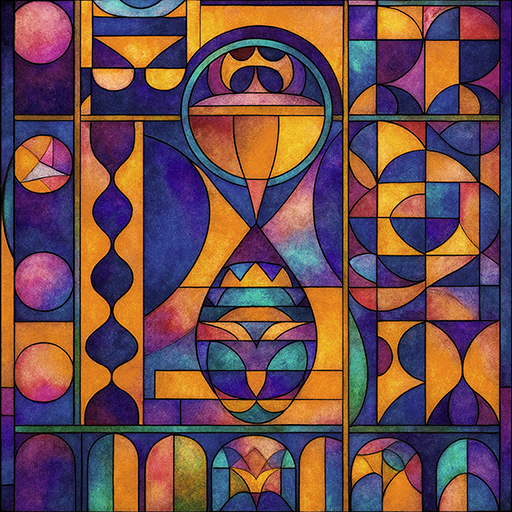
For Kayle
Description of the Hourglass
The emotional atmosphere of the hourglass is steady and pressing. There is a quiet insistence as moments accumulate and pass without interruption. Attention narrows toward the present, which feels both fleeting and precise.
Watching time move can evoke calm or unease. There is comfort in rhythm, yet discomfort in inevitability. The hourglass does not rush, but it does not wait. It creates a sense of being carried forward, whether or not one feels prepared.
Emotionally, the hourglass is where awareness meets momentum.
Symbolic Attributes of the Hourglass
Momentum: Represents time advancing through sustained motion.
Constraint: Reflects movement shaped by structure rather than freedom.
Irreversibility: Indicates progression that cannot be undone without intervention.
Duration: Marks continuity rather than discrete moments.
Pressure: Suggests urgency created by limited capacity.
Reset: Represents the possibility of renewal through deliberate inversion.
Aesthetic Values of the Hourglass
Curvature:
Continuous form emphasizes flow and transition between states.Symmetry:
Balanced chambers reinforce equivalence between what has passed and what remains.Transparency:
Visible movement foregrounds awareness of passage and accumulation.
Dream Indicators of the Hourglass
Heightened Time Sensitivity: Indicates increased awareness of passing opportunity.
Present Focus: Reflects attention drawn to immediacy rather than anticipation.
Pressure to Act: Signals internal urgency without external demand.
Acceptance of Limits: Suggests recognition of finitude or constraint.
Desire for Renewal: Points to readiness to reset patterns or cycles.
Cultural References Aligned with The Hourglass
Year: Ancient Greece (~5th century BCE)
Title: The Myth of Chronos
Source: Greek Mythology
Quote: "Chronos, the personification of time, consumes all things in his unending course."
Explanation: Chronos embodies the inexorable flow of time and its all-devouring nature. He is sometimes depicted with an hourglass, symbolizing the measurement and passage of time. The hourglass in this context aligns with the Jungian symbol of the Hourglass, representing the transient nature of existence and the cycles of life and death. Recognizing the influence of time is crucial in Jungian psychology for the process of individuation and the integration of the psyche.
Year: 1609
Title: Sonnet 12
Author: William Shakespeare
Quote: "And nothing 'gainst Time's scythe can make defence."
Explanation: In Sonnet 12, Shakespeare reflects on the ravages of time and the inevitable decay it brings. The imagery of time wielding a scythe echoes the symbolism of the hourglass, representing the finite nature of life. In Jungian terms, the hourglass symbolizes the acceptance of time's passage and mortality, which is crucial for self-realization and the process of individuation. Embracing this truth allows for a more profound understanding of one's existence and promotes psychological growth.
Year: 1818
Title: The World as Will and Representation
Author: Arthur Schopenhauer
Quote: "Time is that by virtue of which everything becomes nothing in our hands."
Explanation: Schopenhauer reflects on the fleeting nature of existence and how time leads to the dissolution of all things. The hourglass symbolizes this inevitable passage of time and the impermanence of life. In Jungian terms, acknowledging the hourglass as a symbol encourages individuals to confront mortality and the transient nature of reality, promoting a deeper understanding of the self and the journey toward wholeness.
