The Jester
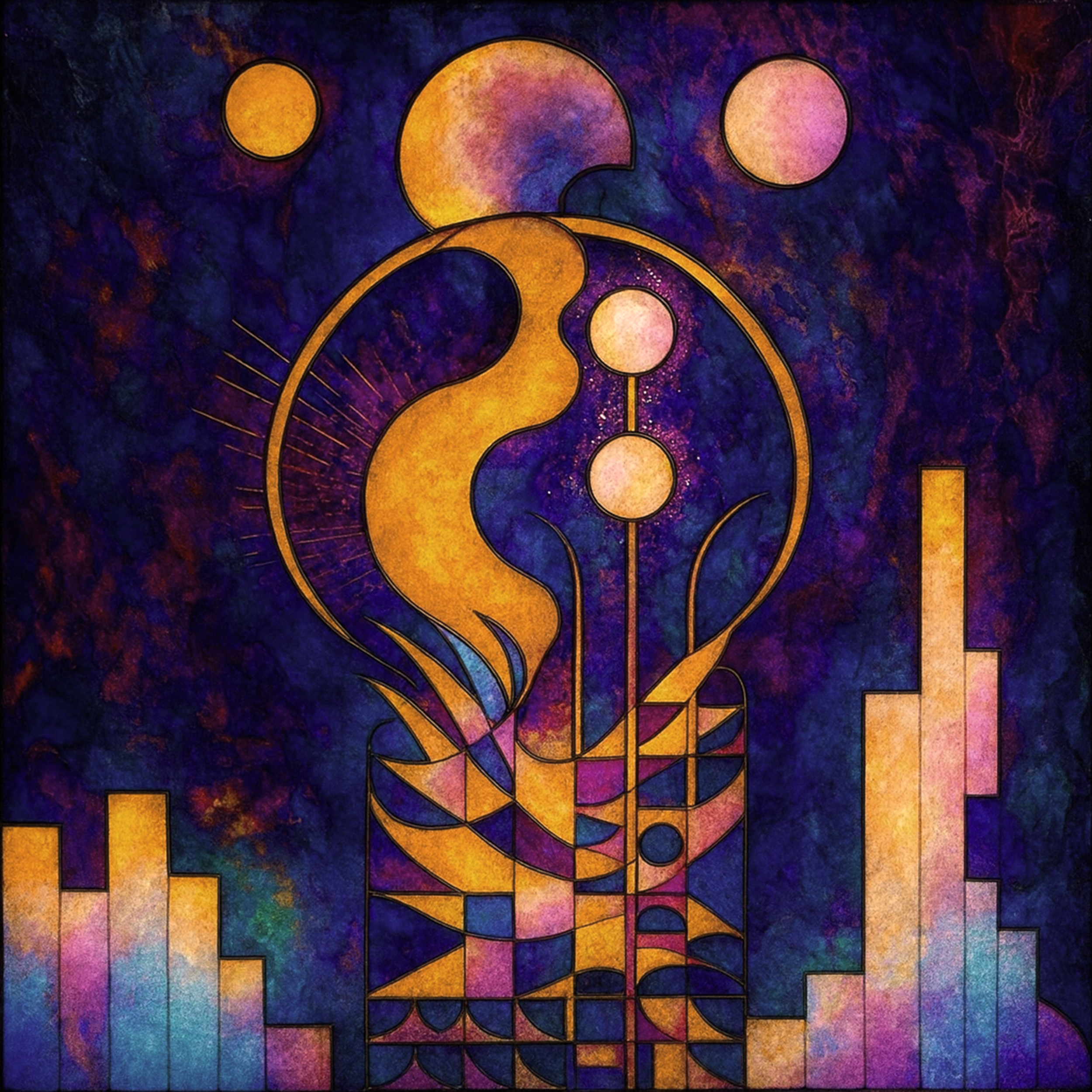
Primary Seed: "Inversion" aligns with the Jester archetype, representing the playful subversion of expectations, the overturning of norms, and the power of seeing the world from an unconventional perspective. In this artwork, the figure seated on a checkerboard stage within a structured, almost mechanical environment embodies the Jester’s approach of inversion—a reminder that humor and wit can reveal truths hidden in plain sight.
In The Jester, inversion is depicted through the juxtaposition of orderly structures with the playful, reflective posture of the central figure. The checkerboard floor, a symbol of duality and order, contrasts with the Jester’s unconventional stance. The figure appears contemplative, looking toward a smaller representation of itself, as if observing life through a mirror or lens that distorts and reflects back a different view. This self-reflective aspect hints at the Jester's use of humor and paradox to uncover deeper insights.
The surrounding circular and mechanical shapes create a sense of containment, as if the Jester exists within a clockwork or systematic reality, yet chooses to disrupt it with whimsy and inversion. The spiral and circular forms in the background suggest movement and cyclical repetition, symbolic of the Jester’s role in breaking repetitive patterns and questioning established paths.
The various architectural forms, reminiscent of chess pieces and towers, evoke a structured world that the Jester chooses to reinterpret and play within. This inversion of structure signifies the Jester’s power to take serious matters lightly and to find joy within constraints. In Jungian terms, inversion reflects the Jester’s function of turning accepted norms upside down, revealing the folly in rigid perspectives and inviting a more flexible, open-minded approach to life.
The small figure within the larger figure’s focus acts as a mirror, suggesting self-awareness infused with humor and irony. The Jester understands the absurdity of life’s “game” and uses inversion as a tool to reveal hidden layers of reality, challenging viewers to see things from a fresh, altered angle.
Through these elements, The Jester captures inversion as the essence of the archetype—disrupting norms, challenging perceptions, and using humor as a means of insight. This artwork demonstrates the Jester’s unique gift to bring levity and perspective, embodying inversion as a means to shake free of convention and reveal profound truths through the lens of playfulness.
For Kayle
Description of The Jester
The Jester embodies the spirit of humor, playfulness, and irreverence, symbolizing the importance of laughter and lightness in maintaining a healthy perspective on life. With wit and wisdom, The Jester challenges authority, exposes hypocrisy and embraces the absurdity of existence.
The Jester represents the ability to bring joy, laughter, and lightness to life, symbolizing the importance of humor and playfulness in maintaining a healthy perspective. Beyond entertainment, The Jester*challenges authority and questions the status quo, using humor and wit to expose hypocrisy and provoke change. The Jester often sees life from a different perspective, symbolizing the wisdom that comes from embracing the absurdity of life.
However, The Jester can also symbolize distraction and avoidance, using humor to deflect serious issues or avoid confronting difficult emotions. At times, The Jester may embrace chaos and anarchy, representing the potential for disruption and disorder due to their irreverence. This unconventional approach may lead to loneliness or misunderstanding, as The Jester risks being seen as frivolous or not taken seriously by others.
Characteristics of The Jester
Challenge: The state of questioning authority and provoking change through humor and wit.
Humor: The state of bringing joy and lightness to life, helping to maintain a healthy perspective.
Wisdom: The state of seeing life from a different perspective, embracing the absurdity, and finding meaning in the unexpected.
Challenges Faced by The Jester
Avoidance: The state of using humor to deflect serious issues or to avoid confronting difficult emotions.
Chaos: The state of embracing disorder or disruption due to irreverence or refusal to conform.
Loneliness: The state of feeling isolated or misunderstood due to an unconventional approach to life.
Symbolic Imagery Associated with The Jester
Court and Audience: The setting of The Jester’s performances, symbolizing the balance between entertainment and critique, and the ability to provoke thought and change through laughter.
Jester’s Hat and Bells: The symbols of humor and playfulness, representing The Jester’s role in bringing joy and lightness to life.
Masks and Costumes: The symbols of disguise and role-playing, representing The Jester’s ability to challenge authority and question the status quo through humor and wit.
Dreaming of The Jester
Avoidance and Distraction: A dream of The Jester might reflect the dreamer’s use of humor to avoid confronting difficult emotions or issues, indicating a need to address underlying concerns.
Challenge to Authority: The Jester in a dream may represent the dreamer’s desire to question authority or to provoke change through humor and wit, indicating a focus on challenging the status quo.
Humor and Playfulness: Dreaming of The Jester often symbolizes the dreamer’s need for humor and playfulness in their life, reflecting the importance of maintaining a healthy perspective.
Cultural References Aligned with The Jester
Author: Ecclesiastes
Year: ~3rd century BCE
Quote: “A time to weep, and a time to laugh.”
Explanation: This quote reflects the Jester’s understanding of life’s dual nature. The archetype acknowledges the importance of laughter even in times of sorrow, using humor to navigate the complexities of human existence.
Author: Native American Mythology
Year: Oral tradition
Quote: “Coyote laughed and said, ‘Let’s try again.’”
Explanation: Coyote embodies the Jester’s resilience, using humor to navigate challenges. His antics teach lessons about adaptability, revealing how playfulness can be a source of wisdom.
Author: Samuel Beckett
Year: 1953
Title: Waiting for Godot
Quote: “Nothing is funnier than unhappiness.”
Explanation: The characters Vladimir and Estragon use humor to cope with existential despair. Their absurd dialogue exemplifies the Jester archetype, as they use playfulness to mask deeper existential questions.
