The Outlaw
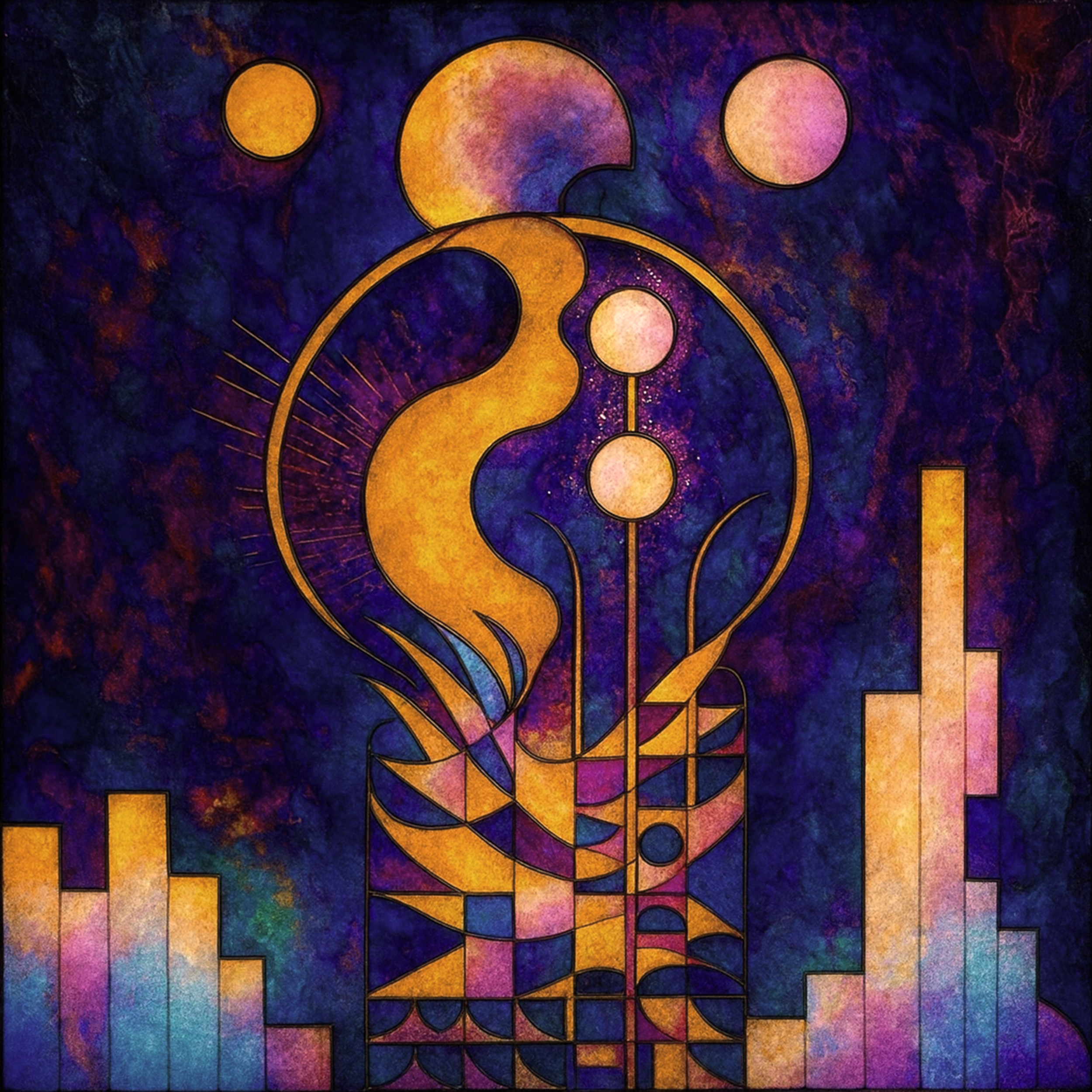
Primary Seed: "Event Horizon" aligns with the Outlaw archetype, symbolizing the point of no return, a boundary where transformation becomes inevitable, and the familiar world is left behind. In this artwork, the long, checkerboard pathway leading to a vanishing point represents the Outlaw’s journey toward an event horizon—a moment of profound change where societal rules and norms are transcended.
In The Outlaw, the concept of an event horizon is depicted through the receding lines of the pathway, drawing the viewer’s eye to the center of the composition. This vanishing point suggests an unknown realm, symbolizing the Outlaw’s willingness to step beyond established boundaries and into uncharted territory. The checkerboard pattern, often associated with order and control, is stretched toward a horizon where its structure begins to dissolve, hinting at the Outlaw’s rebellion against conventional limits.
The circular forms and concentric patterns surrounding the pathway create a sense of gravity and pull, as though the Outlaw is being drawn inevitably toward transformation. This sense of movement toward the unknown captures the archetype’s attraction to breaking free from restrictions, embracing risk, and pursuing radical change. The circular pattern resembles a vortex, representing the powerful forces that drive the Outlaw toward liberation.
The abstract shape at the center, resembling an hourglass or portal, reinforces the idea of crossing a threshold. It suggests that once the Outlaw reaches this point, there is no going back—a metaphor for the irreversible impact of challenging and redefining norms. In Jungian terms, the event horizon represents a psychological crossing where the Outlaw confronts the self and the shadow, leading to deep inner transformation.
The vast emptiness surrounding the pathway underscores the Outlaw’s solitude on this journey, as they must often leave behind the security of the familiar to explore new possibilities. The stark contrast between light and dark areas in the artwork reflects the Outlaw’s courage in facing the unknown, willing to disrupt stability for the chance to achieve something greater.
Through these elements, The Outlaw captures the event horizon as a core quality of the archetype, illustrating the Outlaw’s fearless pursuit of change and defiance of limits. This artwork demonstrates the Outlaw’s role in pushing boundaries, embodying the event horizon as a point where transformation becomes not just possible but inevitable, driven by a commitment to freedom and authenticity.
For Kayle
Description of The Outlaw
The Outlaw archetype embodies the spirit of defiance, rebellion, and radical change. It symbolizes the power to challenge oppressive systems and fight for freedom. The Outlaw represents the urge to break free from societal norms and confront injustice head-on, often at great personal risk. This archetype channels anger and discontent into action, leading revolutions and inspiring change.
The Outlaw symbolizes the courage to rise against authority and confront what is unjust, often representing the desire to overthrow the status quo and pave the way for a new order. This archetype channels anger and discontent into action, leading revolutions and inspiring change. However, the Outlaw’s relentless pursuit of justice can also lead to chaos, violence, and alienation as they walk a lonely road against the forces of oppression. The Outlaw may experience isolation due to their uncompromising nature, representing the heavy burden of standing alone against powerful adversaries.
Characteristics of The Outlaw
Courage: The bravery to face opposition, challenge authority, and fight for what one believes is right.
Defiance: The strength to resist control, refuse conformity, and stand up for personal beliefs against all odds.
Revolution: The ability to inspire radical change and lead movements that confront injustice.
Challenges Faced by The Outlaw
Isolation: The experience of loneliness and alienation due to a lack of understanding or acceptance from others.
Recklessness: Acting without considering consequences, leading to unintended harm or chaos.
Destruction: The potential for violence or conflict as a result of challenging established norms and disrupting order.
Symbolic Imagery Associated with The Outlaw
Broken Chains: Represent the fight for liberation and the desire for change.
Flaming Torches: Symbolize the burning passion that fuels rebellion.
Contrast and Conflict: Visualizes the struggle against oppression, highlighting tension between order and chaos.
Dreaming of The Outlaw
Isolation and Independence: Represents the desire for greater autonomy and the experience of standing alone in one’s beliefs.
Rebellion: Highlights the need to challenge limiting beliefs or break free from restrictive situations.
Facing Injustice: Reflects the dreamer’s anger or frustration at perceived injustices, urging them to take a stand.
Cultural References Aligned with The Outlaw
Year: ~7th century BCE
Title: Theogony
Source: Greek Mythology
Deity: Prometheus
Quote: “I gave them fire.”
Explanation: Prometheus defies Zeus by giving fire to humanity, symbolizing the Outlaw’s willingness to disrupt power for a greater cause. For his crime, Prometheus is doomed to suffer a great eagle pecking out a liver that regenerates each evening.
Year: ~13th century CE
Title: The Poetic Edda
Source: Norse Mythology
Deity: Loki
Quote: “Mischief is the act of creation.”
Explanation: Loki, the trickster god, disrupts order, embodying the Outlaw by challenging the gods and reshaping reality through mischief.
Year: ~7th century BCE
Title: Thus Spoke Zarathustra
Author: Friedrich Nietzsche
Deity: Prometheus
Quote: “You must have chaos within you to give birth to a dancing star.”
Explanation: Nietzsche’s philosophy reflects the Outlaw’s spirit by encouraging individuals to defy societal norms to create new values.
