The Bridge
Primary Seed: "Topology" captures the essence of the Bridge archetype as continuity across difference. In mathematics, topology studies relationships that remain intact through transformation. Forms may stretch, bend, or shift, yet their connections persist. A bridge functions in this way: it preserves relation while allowing movement. What matters is not the distance crossed, but the fact that passage remains possible.
In design, topology describes underlying structure—the invisible logic that holds a form together even as its surface changes. Applied symbolically, the Bridge represents the conditions that allow experience to move from one state to another without breaking coherence. It is not the destination, but the relational structure that makes transition legible.
At its core, the Bridge holds continuity through change. It maintains connection while transformation unfolds.
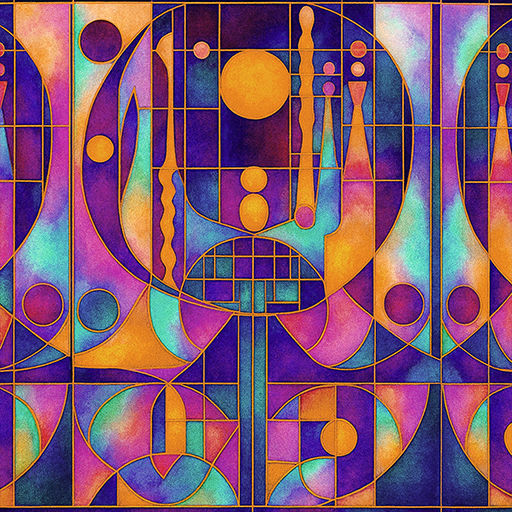
Description of the Bridge
Crossing a bridge carries a distinct emotional tone. It is a moment of suspension—no longer fully anchored to what came before, not yet arrived at what lies ahead. Attention sharpens. The body becomes aware of balance, direction, and exposure.
There is often vulnerability in this passage. Movement forward requires trust: in the structure beneath one’s feet, in the choice to proceed, in the possibility that something different awaits. At the same time, bridges can feel reassuring. They offer a way through difficulty that does not require confrontation or collapse, only movement.
Emotionally, the bridge is where anticipation and uncertainty coexist. It is a place of decision that is already in motion.
Symbolic Attributes of the Bridge
Continuity: Represents the preservation of relationship across change.
Passage: Marks movement between distinct states, phases, or understandings.
Suspension: Holds the experience of being between—neither origin nor arrival.
Risk: Reflects the exposure inherent in transition and forward movement.
Integration: Allows disparate elements to remain connected without collapsing into sameness.
Support Structure: Symbolizes the unseen systems—internal or external—that make transition possible.
Aesthetic Values of the Bridge
Symbolism of Structure:
The design of a bridge emphasizes strength, balance, and intentional construction. Stone bridges suggest permanence and reliability, while suspension bridges convey flexibility, tension, and trust in unseen forces.Linking Depths:
Bridges often span water, ravines, or voids, visually linking surface movement with depth below. This evokes the passage over emotional, psychological, or unconscious terrain.Balance Required:
The tension held within a bridge’s structure reflects the effort required to sustain connection while moving forward, emphasizing precision, care, and equilibrium.
Dream Indicators of the Bridge
Readiness for Transition: Indicates the psyche preparing for movement or change.
Ambivalence: Reflects mixed emotions—hope alongside hesitation.
Decision Pressure: Signals awareness that a choice is active, even if unresolved.
Fear of Exposure: Points to anxiety about being seen, tested, or unsupported during change.
Desire for Integration: Suggests an inner need to bring separated aspects of experience into relation.
Cultural References Aligned with The Bridge
Year: ~13th Century BCE
Title: The Bifrost Bridge
Source: Norse Mythology
Quote: “Bifrost is the bridge between Midgard and Asgard, between mortals and gods.”
Explanation: The Bifrost Bridge symbolizes a passage between worlds which connects the conscious and unconscious realms. It represents the potential for transcendence and the ability to journey into higher realms of understanding.
Year: 6th century BCE
Title: The Middle Way
Source: Buddhist philosophy
Quote: "The Middle Way is the path of moderation between the extremes of sensual indulgence and self-mortification."
Explanation: The Middle Way represents a bridge between opposites, reflecting Jung's concept of the transcendent function that mediates between conscious and unconscious.
Year: ~19th Century CE
Title: Leap of Faith
Author:Søren Kierkegaard
Quote: “To venture is to lose one’s footing momentarily. Not to venture is to lose oneself.”
Explanation: Kierkegaard’s leap of faith can be seen as a metaphorical bridge between doubt and belief. In Jungian terms, the Bridge symbolizes the journey from confusion to meaning, where one must cross from the known into the uncertain to discover a deeper truth.
Year: 1928
Title: The Bridge of San Luis Rey
Author: Thornton Wilder
Quote: “There is a land of the living and a land of the dead and the bridge is love.”
Explanation: Wilder uses the metaphor of a bridge to symbolize the connection between life and death, reflecting Jung’s concept of uniting opposing forces. Love, acting as the bridge, transcends boundaries and taps into archetypal imagery from the collective unconscious, facilitating personal growth and self-realization.
