The Diplomat
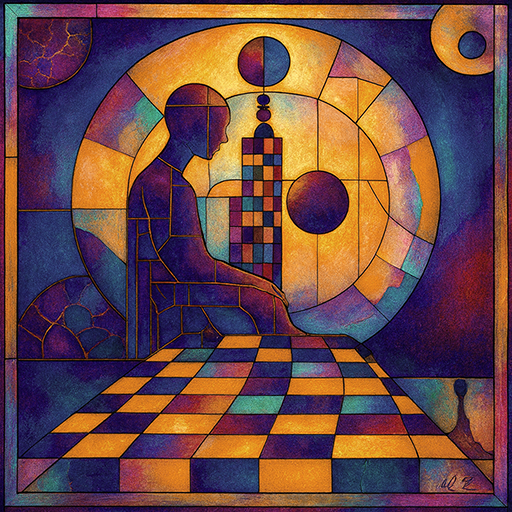
Primary Seed: "Equilibrium" aligns with the Diplomat archetype, representing the ability to balance opposing forces and maintain harmony within complex situations. In this artwork, the figure sitting calmly before a structured composition of circles, squares, and a checkerboard floor embodies the Diplomat’s role in achieving equilibrium, mediating between disparate elements to create unity.
The concept of equilibrium is illustrated through geometric symmetry and balanced composition. The checkerboard floor, often a symbol of duality, reflects the Diplomat’s ability to navigate between contrasting perspectives, finding stability amidst differences. The seated figure, depicted in contemplative repose, emphasizes the inner stillness required to achieve and maintain balance, suggesting that true diplomacy begins within.
The structured forms—circles and squares—interplay around the figure, symbolizing the merging of different energies or viewpoints. The circular elements evoke wholeness and inclusiveness, while the squares represent structure and order, both essential in the Diplomat’s approach to achieving equilibrium. This juxtaposition mirrors the Diplomat's skill in holding space for multiple perspectives, creating a sense of harmony where there might otherwise be tension.
The larger circle that surrounds the figure suggests a protective boundary, a safe space where negotiation and reconciliation can occur. This protective "sphere" indicates the Diplomat’s role as a mediator, bridging worlds and fostering understanding between seemingly opposing forces. In Jungian terms, equilibrium represents the balancing of the conscious and unconscious, integrating different aspects of the self and external conflicts to achieve inner and outer harmony.
The upright figure in the background, with variously shaded sections, symbolizes the world of diverse influences the Diplomat must balance. The small pawn in the corner of the checkerboard may represent the initial or subtle actions that ripple outward to maintain harmony, signifying the quiet power of diplomacy.
Through these elements, The Diplomat captures equilibrium as a dynamic and ongoing process of balance and understanding. The artwork illustrates the archetype’s capacity to create stability in a world of contrasts, demonstrating how the Diplomat brings peace and cohesion, transforming differences into a harmonious whole.
For Kayle
Description of The Diplomat
The Diplomat represents the power of mediation, understanding, and the ability to navigate complex social dynamics to achieve harmony. This archetype symbolizes the virtues of empathy, tact, and patience, guiding us to create peaceful resolutions in times of conflict.
The Diplomat embodies the role of a mediator who seeks balance and harmony in all interactions. Skilled at understanding and empathizing with different perspectives, the Diplomat strives to create common ground and foster cooperation. This archetype represents the importance of thoughtful communication and the ability to resolve conflicts through compromise and negotiation.
However, the Diplomat may also wrestle with the darker aspects of manipulation and deception, risking the use of charm or persuasion for selfish gains. Over time, the constant effort to mediate can lead to feelings of overwhelm or burnout, highlighting the challenges of maintaining integrity in the face of conflicting demands.
Characteristics of The Diplomat
Empathy: The ability to genuinely understand and appreciate different viewpoints, fostering mutual respect and cooperation.
Mediation: The skill of facilitating communication and understanding, helping to resolve conflicts and promote harmony.
Tact: The quality of communicating thoughtfully and with consideration, helping to avoid misunderstandings and build trust.
Challenges Faced by The Diplomat
Compromise: The risk of sacrificing core principles or values to reach agreement, which can result in a loss of authenticity.
Manipulation: The tendency to use charm or persuasion for self-serving or unethical purposes, potentially leading to deceit.
Overwhelm: The state of being burdened by the demands of constant mediation and conflict resolution, leading to stress or emotional exhaustion.
Symbolic Imagery Associated with The Diplomat
Diplomatic Attire: Representing the respect and authority they command.
Documents and Treaties: The symbols of agreements and resolutions, representing the Diplomat’s ability to bring about positive outcomes through negotiation and compromise.
Olive Branch and Peace Symbols: The symbols of peace and reconciliation represent the Diplomat’s role in fostering harmony and resolving conflicts.
Dreaming of The Diplomat:
Conflict Resolution: Dreaming of the Diplomat often symbolizes the dreamer’s role in resolving conflicts or their desire to mediate and facilitate understanding between others, reflecting the importance of communication and cooperation.
Empathy and Understanding: The Diplomat in a dream may represent the dreamer’s ability to empathize with different perspectives or their need to see beyond their viewpoint to create mutual respect and harmony.
Manipulation and Deception: A dream of the Diplomat might reflect the dreamer’s experience of manipulation or fear of being deceived, indicating a need to be cautious or assert control over their interactions.
Cultural References Aligned with The Diplomat
Year: ~8th century CE
Title: Kojiki
Source: Japanese Mythology
Quote: “With patience, the rice will grow.”
Explanation: Inari, the god of rice and prosperity, reflects the Diplomat’s role in fostering cooperation and peace within communities.
Year: ~5th century BCE
Title: The Art of War
Author: Sun Tzu
Quote: “The supreme art of war is to subdue the enemy without fighting.”
Explanation: Sun Tzu’s teachings reflect the Diplomat’s ability to achieve goals through strategy and negotiation rather than brute force.
Year: ~375 BCE
Title: The Republic
Author: Plato
Quote: “Justice means minding your own business and not meddling with others.”
Explanation: Socrates, as presented by Plato, represents the Diplomat by advocating for a just society where each person fulfills their role. The quote emphasizes balance and respect within a community, core aspects of the Diplomat's pursuit of harmony and effective governance.
