The Labyrinth
Primary Seed: "Vortex” embodies the essence of the Labyrinth archetype as inward pull rather than outward navigation. In physics, a vortex describes motion drawn toward a center through continuous rotation. Symbolically, the Labyrinth functions as a field of attraction: movement is compelled, not chosen, and progression occurs through sustained engagement rather than direct control.
The Labyrinth is defined by inevitability rather than efficiency. One does not pass through it quickly or cleanly. What matters is not speed, but persistence under continuous redirection.
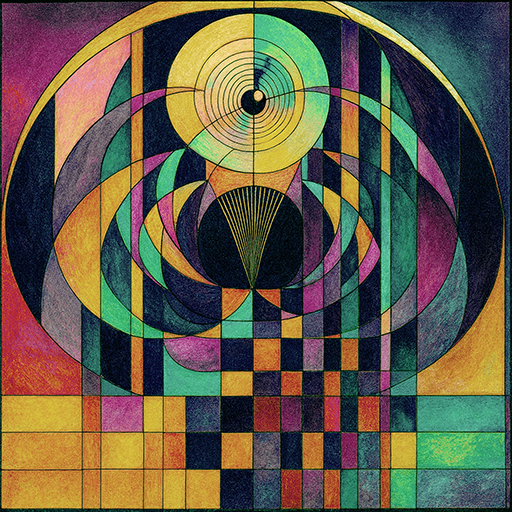
For Kayle
Description of The Labyrinth
The emotional atmosphere of the labyrinth is absorbing and disorienting. Orientation shifts gradually; forward motion feels real, yet its destination remains obscured. Attention turns inward as external reference points fade.
There is tension between trust and fatigue. The path offers continuity, but not reassurance. Movement becomes meditative or burdensome depending on endurance. The experience is less about decision-making and more about remaining engaged despite uncertainty.
Emotionally, the labyrinth is where patience is tested over time.
Characteristics of The Labyrinth
Complexity: Represents layered structure that resists simplification.
Continuity: Indicates an unbroken path without shortcuts or exits.
Compulsion: Reflects movement driven by pull rather than choice.
Endurance: Marks sustained engagement under prolonged uncertainty.
Internalization: Directs focus away from external cues toward inner processing.
Integration: Suggests convergence through completion rather than escape.
Associated Symbolic Imagery
Central Point:
Serves as a gravitational focus rather than a reward.Circular Design:
Reinforces rotation, recurrence, and inward motion.Enclosed Space:
Creates containment that limits deviation and external interruption.Intricate Pathways:
Emphasize duration, repetition, and incremental progression.
Dream Indicators of The Labyrinth
Prolonged Uncertainty: Indicates extended engagement with unresolved situations.
Psychic Immersion: Reflects deep involvement without clear external resolution.
Mental Fatigue: Suggests strain from sustained complexity or ambiguity.
Persistence Without Clarity: Signals commitment despite lack of reassurance.
Approach to Integration: Points toward nearing internal consolidation rather than solution.
Cultural References Aligned with The Labyrinth
Year: ~2500 BCE
Title: The Labyrinth of Hawara
Source: Egyptian Mythology
Quote:"An endless maze of chambers and corridors, surpassing even the pyramids in grandeur."
Explanation: The Labyrinth of Hawara, attributed to Pharaoh Amenemhat III, was described by ancient historians like Herodotus and Strabo as an architectural marvel with thousands of rooms and intricate passageways. It symbolizes the complexity and mystery of life and the afterlife. In Jungian psychology, the labyrinth represents the unconscious mind's intricate pathways. Navigating this labyrinth reflects the individual's journey to explore hidden aspects of the self, confronting inner complexities to achieve self-awareness and personal growth.
Year: ~1st century BCE
Title: The Labyrinth of Emain Macha
Author: Irish Mythology
Quote: "Within the twisting halls of Emain Macha, heroes proved their worth by finding their way through the endless turns."
Explanation: Emain Macha, the ancient seat of the kings of Ulster, was said to contain a labyrinth used as a training ground for warriors. The maze symbolizes the challenges and trials one must face to attain mastery and honor. In Jungian terms, the labyrinth represents the individual's inner journey to confront personal challenges and develop courage and resilience. It reflects the process of transformation and the quest to integrate various aspects of the psyche.
Year: 1986
Title: Labyrinth
Director: Jim Henson
Quote: "Everything seems possible and nothing is what it seems."
Explanation: The film follows Sarah, a teenage girl who must navigate a fantastical labyrinth to rescue her baby brother from the Goblin King. The labyrinth symbolizes her journey toward maturity, self-reliance, and understanding. Each challenge she faces represents internal struggles with responsibility, identity, and desire. In Jungian psychology, the labyrinth represents the challenges of adolescence and the process of integrating different aspects of the self. Sarah's navigation reflects the individuation process, confronting fears and embracing personal growth..
