The Lake
Primary Seed: "Refraction" speaks to the bending and alteration of perception when encountering obstacles or boundaries in the psyche. Refraction captures the essence of the Lake archetype as altered perception through stillness. In optics, refraction occurs when light passes through a medium and changes direction, revealing distortion, depth, or hidden spectrum. Symbolically, the Lake functions as such a medium: what enters it is not stopped, but bent, slowed, and subtly transformed.
The Lake is defined by mediation rather than resistance. It does not block movement; it changes how things are seen. Meaning here emerges through quiet alteration, where clarity and distortion coexist.
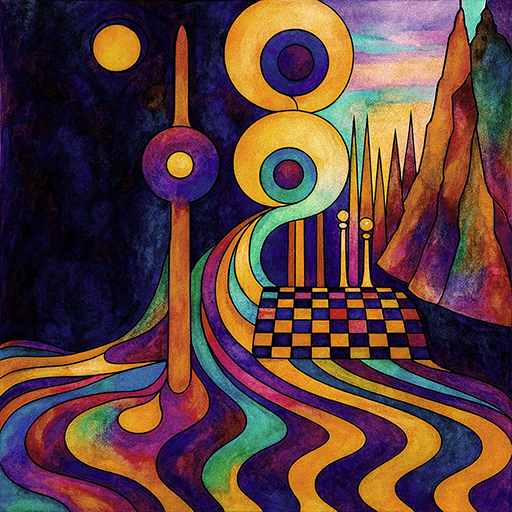
For Kayle
Description of the Lake
The emotional atmosphere of the lake is hushed and suspended. Surface calm invites attention inward, while depth resists immediate comprehension. Time feels elongated, and motion becomes deliberate rather than reactive.
Being near a lake can evoke serenity or unease. The stillness reflects back what is brought to it, yet offers little guidance about what lies beneath. The experience encourages observation without intervention, allowing thoughts and emotions to settle into visibility.
Emotionally, the lake is where perception slows and awareness deepens.
Symbolic Attributes of the Lake
Reflection: Represents perception turned inward without alteration.
Depth: Indicates layered emotional or psychic content beyond immediate awareness.
Containment: Marks the holding of experience without release or discharge.
Distortion: Reflects subtle shifts in understanding caused by context or depth.
Stasis: Suggests suspension of action or movement.
Opacity: Represents what remains unseen despite apparent clarity.
Aesthetic Values of the Lake
Calm Surface:
Smoothness emphasizes stillness, mirroring, and restraint.Depth and Clarity:
Transparency or murkiness conveys the relationship between visibility and concealment.Surrounding Nature:
The enclosing environment frames the lake as a focal point of quiet attention.
Dream Indicators of the Lake
Emotional Stillness: Indicates calm or emotional suspension.
Self-Observation: Reflects attention turned toward internal states.
Submerged Content: Suggests awareness of feelings not yet accessible.
Isolation: Points to inward withdrawal or emotional distance.
Fear of Stagnation: Signals concern about remaining motionless too long.
Cultural Reference Aligned with The Lake
Year: Ancient Greece (~1st century CE)
Title: The Myth of Narcissus, Metamorphoses
Source: Ovid
Quote: "He became entranced by his own reflection in the still, glassy surface of the pool."
Explanation: Narcissus falls in love with his reflection in a tranquil body of water. The lake acts as a mirror, symbolizing self-reflection and the allure of the ego. In Jungian terms, the lake represents the unconscious mind, and Narcissus's fixation illustrates the danger of becoming absorbed in one's persona, neglecting the deeper aspects of the psyche. The myth warns of the consequences of failing to engage with and integrate the unconscious self.
Year: 1854
Title: Walden; or, Life in the Woods
Source: Henry David Thoreau
Quote: "A lake is the landscape's most beautiful and expressive feature. It is Earth's eye; looking into which the beholder measures the depth of his own nature."
Explanation: Thoreau's reflections on Walden Pond highlight the lake as a symbol of introspection, self-discovery, and spiritual enlightenment. The lake serves as a mirror to the soul, offering clarity and depth. In Jungian psychology, engaging with the symbolism of the lake allows individuals to delve into their unconscious minds, fostering personal growth and the process of individuation—the integration of all aspects of the self.
Year: 1890
Title: "The Lake Isle of Innisfree"
Source: Poem by W. B. Yeats
Quote: "I will arise and go now, and go to Innisfree, and a small cabin build there, of clay and wattles made."
Explanation: The Lake Isle of Innisfree symbolizes a retreat into nature and the inner self. The tranquil lake represents peace, introspection, and a connection with deeper aspects of the psyche. In Jungian terms, the lake embodies the unconscious mind, and the speaker's desire to journey there reflects a yearning for self-discovery and spiritual fulfillment. The poem captures the quest for inner harmony through engagement with the unconscious.
