The Chalice
Primary Seed: “Harmonicity”, a term rooted in physics and music theory, captures the essence of the Chalice archetype as alignment through resonance. In physics and music, harmonicity describes the coherence that arises when frequencies relate in stable proportion. Symbolically, the Chalice functions as a receptive structure through which experience is absorbed, adjusted, and brought into balance. It is not defined by what it contains, but by its capacity to receive without distortion.
The Chalice represents emotional attunement—the ability to hold what arrives and allow it to settle into coherence. Harmony here is not imposed; it emerges through relationship. The Chalice maintains internal balance by responding, not resisting.
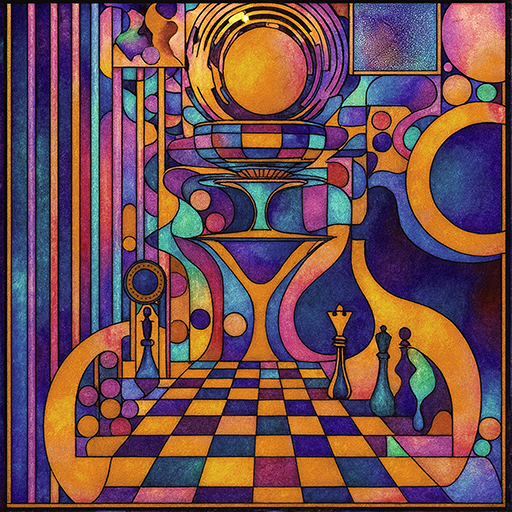
For Kayle
Description of the Chalice
The emotional atmosphere of the Chalice is receptive and attentive. It invites stillness rather than action, openness rather than defense. To encounter the Chalice is to slow down and notice what is being taken in—feelings, impressions, needs, or demands.
There is vulnerability in this posture. Receiving requires trust, discernment, and care. What is welcomed shapes what follows. The Chalice can feel nourishing when its contents are balanced, or heavy when what is held exceeds capacity. Emotionally, it reflects the ongoing work of adjusting—accepting influence while maintaining integrity.
The Chalice is where experience is metabolized rather than resisted.
Symbolic Attributes of the Chalice
Receptivity: Represents openness to influence, experience, and emotional input.
Containment: Symbolizes the ability to hold without spilling, fragmenting, or rejecting.
Attunement: Reflects sensitivity to balance, proportion, and emotional resonance.
Integration: Marks the process by which experience becomes internal coherence.
Vulnerability: Acknowledges exposure inherent in receiving rather than defending.
Imbalance: Indicates the risk of overload, depletion, or distortion when limits are unclear.
Aesthetic Values of the Chalice
Ornate Design:
Decorative detail emphasizes reverence and care, signaling that what is held matters.Reflective Surface:
Mirrored or polished finishes evoke self-awareness and inward examination.Shape and Material:
The vessel form—narrowed base, open mouth—reinforces containment and offering, while material choice reflects cultural and spiritual values.
Dream Indicators of the Chalice
Need for Nourishment: Suggests emotional, creative, or spiritual replenishment is required.
Openness to Influence: Reflects sensitivity to external impact or emotional exchange.
Capacity Testing: Indicates questioning how much can be held or managed at once.
Longing for Balance: Points to desire for harmony between giving and receiving.
Emotional Saturation: Signals fullness that may be sustaining or overwhelming.
Cultural References Aligned with The Chalice
Year: Medieval Period
Title: Le Morte d’Arthur
Author: Sir Thomas Malory
Quote: “You are looking for the Grail that is inside you.”
Explanation: The chalice, known as the Holy Grail, symbolizes the Jungian archetype of the Self, representing the pursuit of spiritual wholeness and individuation. The knights' quest for the Holy Grail mirrors the inner journey toward self-realization, confronting personal shadows and integrating various aspects of their psyche to achieve ultimate enlightenment.
Year: Ancient Celtic mythology
Title: The Cauldron of Dagda
Source: Irish mythology
Quote: "Dagda's cauldron... possesses such a cauldron, which supplies everybody with food according to his needs or merits."
Explanation: Jung saw this mythical cauldron as a precursor to the Grail, symbolizing the nurturing and transformative aspects of the unconscious.
Year: 1550
Title: Rosarium Philosophorum
Artist: Unknown alchemical illustrator
Quote: "The basin contains water, like a uterus in which new life is created."
Explanation: This alchemical image, which Jung studied extensively, depicts the chalice as a womb-like vessel for psychic transformation.
Year: 1844
Title: The Essence of Christianity
Source: Ludwig Feuerbach
Quote: “What the soul receives is what it becomes.”
Explanation: Feuerbach’s idea that human beings internalize what they believe aligns with the Chalice, which symbolizes the inner receptacle for experiences and emotions, reflecting the process of personal transformation.
