The Crossroads
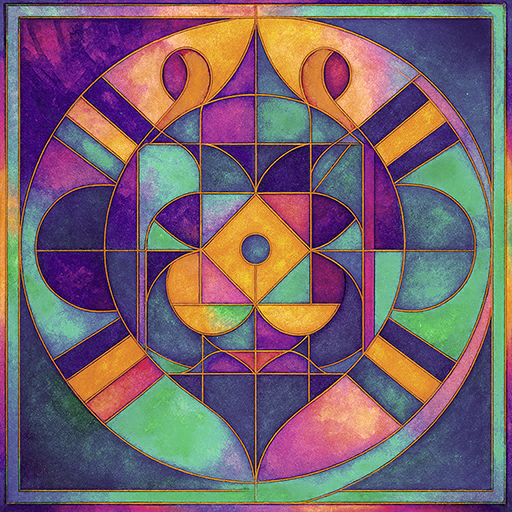
Primary Seed: "Bifurcation" encapsulates the essence of the Crossroads archetype as a point where continuity splits into distinct possibilities. In mathematics and physics, a bifurcation describes a moment when a system shifts from a single trajectory into multiple stable paths. Symbolically, the Crossroads functions as this threshold: a precise moment where direction is no longer implicit and must be selected.
The Crossroads is not defined by movement itself, but by divergence. It marks the instant when small differences in choice produce radically different outcomes. What matters here is not certainty, but irreversibility—the recognition that once a path is taken, the system reorganizes around that decision.
At its core, the Crossroads represents structural change initiated by choice.
For Kayle
Description of the Crossroads
The emotional atmosphere of a crossroads is tense and alert. Attention sharpens as forward motion slows. There is often a feeling of being watched by time itself—an awareness that delay carries consequence just as action does.
Standing at a crossroads can feel destabilizing. Familiar momentum dissolves, replaced by possibility and pressure. Anticipation and anxiety coexist, along with the weight of responsibility. Even without full clarity, the need to move forward becomes unavoidable.
Emotionally, the crossroads is where hesitation gives way to commitment.
Symbolic Attributes of the Crossroads
Divergence: Represents the splitting of a single trajectory into multiple viable paths.
Decision Point: Marks the necessity of choice rather than continued drift.
Irreversibility: Reflects the understanding that outcomes reorganize once a path is chosen.
Agency: Symbolizes active participation in shaping direction rather than passive continuation.
Tension: Holds the strain between possibility and limitation.
Threshold: Indicates passage from potential into consequence.
Aesthetic Values of the Crossroads
Balanced Symmetry:
Symmetry emphasizes equivalence among options, reinforcing the difficulty of selection when no path is clearly dominant.Intersection of Paths:
The visual crossing highlights convergence before separation, underscoring the moment when alternatives are equally present.Open Space:
Negative space around the intersection evokes uncertainty and openness, suggesting futures that are undefined but imminent.
Dream Indicators of the Crossroads
Decision Pressure: Signals awareness that a meaningful choice cannot be postponed.
Inner Conflict: Reflects competing values, desires, or commitments seeking resolution.
Fear of Consequence: Points to anxiety about long-term outcomes or loss of alternatives.
Readiness for Change: Indicates the psyche preparing to commit to a new direction.
Suspended Momentum: Suggests a pause before decisive movement resumes.
Cultural References Aligned with The Crossroads
Year: ~5th century BCE
Title: The Crossroads of Oedipus
Source: Greek Mythology
Quote: “It was at the place where three roads meet that fate awaited him.”
Explanation: In the myth of Oedipus, the protagonist encounters his father, King Laius, at a crossroads without knowing his identity. A quarrel ensues, leading Oedipus to kill Laius, thus unwittingly fulfilling a prophecy. The crossroads symbolize fate, choice, and the pivotal moments that shape one's destiny. In Jungian psychology, the crossroads represent critical points in life where the conscious and unconscious intersect, requiring decisions that influence the path of individuation and self-realization.
Year: ~5th century BCE
Title: Hecate, Goddess of Magic and Crossroads
Source: Greek Mythology
Quote: "Hecate, revered at the crossroads, holding torches to light the way through the mysteries."
Explanation: Hecate is associated with magic, the moon, and entrances or thresholds, particularly crossroads. She is a guardian of liminal spaces and is often invoked during times of transition and decision-making. In Jungian terms, Hecate embodies the guide through the unconscious, illuminating hidden paths within the psyche. The crossroads symbolize moments of choice and transformation, where one confronts different aspects of the self and potential futures.
Year: 1604
Title: Doctor Faustus
Source: Christopher Marlowe's Play
Quote: "Faustus stands in his study, torn between repentance and the pursuit of dark knowledge."
Explanation: Faustus faces a pivotal choice to relinquish his pact with Mephistopheles or continue his quest for power at the cost of his soul. The crossroads symbolize the internal conflict between salvation and damnation, knowledge and hubris. In Jungian psychology, this reflects the struggle with the shadow self and the consequences of choices that either lead toward self-realization or self-destruction.
Year: 1819
Title: On Liberty
Author: John Stuart Mill
Quote: “A person must choose their own path to self-fulfillment.”
Explanation: Mill’s philosophy emphasizes individual choice at key junctures in life, reflecting the Jungian Crossroads as a symbol of personal freedom, responsibility, and the search for meaning.
Year: 1949
Title: The Hero with a Thousand Faces
Author: Joseph Campbell
Quote: “At each stage of the journey, the hero must make a choice.”
Explanation: Campbell’s exploration of the hero’s journey emphasizes the importance of key decisions at crossroads, symbolizing moments of transformation. Each choice brings the hero closer to individuation and self-realization.
