The Desert
Primary Seed: "Desiccation" captures the essence of the Desert archetype as reduction to the essential. In ecological and physical terms, desiccation describes the removal of moisture until only fundamental structures remain. Symbolically, the Desert functions in the same way: it strips experience of excess, comfort, and distraction, leaving only what can endure.
The Desert is not absence for its own sake, but exposure. It reveals what persists when support is withdrawn and ornamentation collapses. What survives here is not abundance, but necessity. At its core, the Desert represents endurance through scarcity and clarity through subtraction.
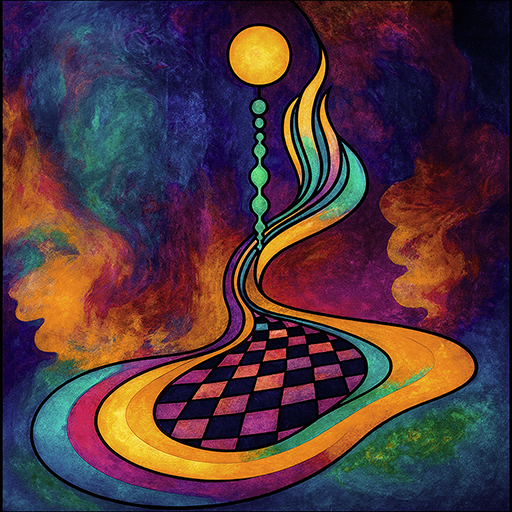
For Kayle
Description of the Desert
The emotional atmosphere of the desert is stark and demanding. Sensation becomes heightened: heat presses, distance stretches, and time feels slow and unforgiving. There is little relief, little concealment. One becomes acutely aware of effort, limitation, and vulnerability.
Yet within this severity, a strange calm can emerge. Without distraction, attention narrows. Thought simplifies. What once felt urgent may dissolve, while what truly matters comes into focus. The desert can feel punishing or purifying, depending on what one carries into it.
Emotionally, the desert is where illusion thins and resolve is tested.
Symbolic Attributes of the Desert
Essentialism: Represents focus on what is necessary rather than what is abundant.
Exposure: Symbolizes lack of cover, protection, or distraction.
Endurance: Reflects sustained effort under prolonged strain.
Self-Reliance: Marks dependence on internal resources rather than external support.
Deprivation: Indicates absence that challenges comfort and identity.
Clarity Through Loss: Suggests insight emerging when excess falls away.
Aesthetic Values of the Desert
Barren Landscape:
The absence of vegetation and shelter emphasizes openness, vulnerability, and inward focus.Heat and Light:
Relentless exposure intensifies perception, symbolizing pressure that forces adaptation or collapse.Endless Horizon:
Unbroken distance evokes both possibility and fatigue, reinforcing scale, isolation, and persistence.
Dream Indicators of the Desert
Emotional Depletion: Suggests exhaustion, burnout, or lack of nourishment.
Search for Meaning: Reflects a need to simplify, reassess, or reconnect with core values.
Loneliness: Indicates separation from support or emotional connection.
Testing of Resolve: Signals a period where perseverance is required without immediate reward.
Desire for Renewal: Points toward an eventual need for restoration after sustained hardship.
Cultural References Aligned with The Desert
Year: 1844
Title: Thus Spoke Zarathustra
Source: Friedrich Nietzsche
Quote: “I love those who do not seek beyond the stars, but who seek the desert within themselves.”
Explanation: Nietzsche's Zarathustra retreats to the wilderness, embodying the desert as a space of solitude and philosophical clarity, where one sheds external distractions to uncover deeper truths.
Year: 1988
Title: The Alchemist
Source: Paulo Coelho
Quote: “The desert is a capricious lady, and sometimes she drives men crazy.”
Explanation: In The Alchemist, the desert symbolizes the Jungian archetype of the Journey of the Self, representing the vast, uncharted landscape of the unconscious mind. The protagonist, Santiago, embarks on a spiritual quest across the desert, confronting obstacles and embracing silence and solitude, leading him to profound self-discovery and transformation.
Year: 1922
Title: "The Waste Land"
Source: T.S. Eliot
Quote: "I will show you fear in a handful of dust."
Explanation: Eliot's poem utilizes desert imagery to depict spiritual desolation and the fragmentation of modern society after World War I. The barren landscape symbolizes the emptiness and meaninglessness felt by individuals disconnected from deeper values and traditions. In Jungian psychology, the desert represents the sterile state of the psyche when cut off from the unconscious and archetypal energies. The poem reflects the necessity of confronting this inner wasteland to restore wholeness and reinvigorate the psyche with purpose and connection.
Year: 1943
Title: The Little Prince
Source: Antoine de Saint-Exupéry
Quote: "What makes the desert beautiful is that somewhere it hides a well."
Explanation: In The Little Prince, the desert serves as a backdrop for introspection and profound conversations between the narrator and the Little Prince. The desert symbolizes isolation but also the potential for hidden treasures of wisdom and self-discovery. In Jungian terms, the desert represents the unconscious mind stripped of external distractions, allowing for deep reflection. The hidden well signifies the inner resources and truths that can be found when one confronts the emptiness within, leading to personal growth and self-realization.
