The Mountain
Primary Seed: "Ascent" captures the essence of the Mountain archetype, symbolizing the journey toward higher understanding, achievement, and personal growth. In physics and mathematics, ascent refers to climbing or rising toward a peak, echoing the upward movement of energy, effort, and progress. The Mountain archetype embodies the challenges we face and the clarity that emerges through perseverance.
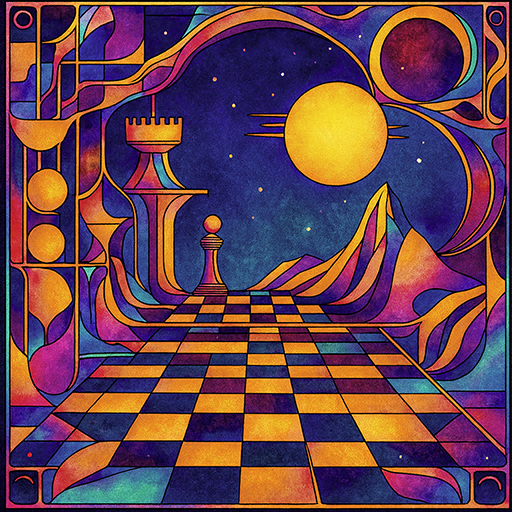
The towering architecture embedded in the landscape evokes both man-made ambition and natural forces, emphasizing that the ascent is both internal and external.
Ascent defines the Mountain as a structure of upward progression driven by sustained effort. It establishes orientation toward elevation, distance, and accumulation rather than immediacy. The Mountain is encountered through gradual gain, resistance, and measurable advancement toward a higher state.
For Kayle
Description of the Mountain
The Mountain evokes effort, exposure, and restraint. Movement is slower here; each step demands attention. Breath shortens, terrain narrows, and distraction falls away under the pressure of elevation.
Emotionally, the Mountain carries a mix of determination and vulnerability. Progress brings separation—from comfort, from others, from ease. The air feels thinner, the view wider. Solitude increases as perspective expands, producing both resolve and unease.
The experience emphasizes endurance over speed and clarity earned through sustained strain.
Symbolic Attributes of the Mountain
Elevation: Orientation toward higher states of awareness or capacity.
Endurance: Sustained effort over extended duration.
Perspective: Expanded viewpoint gained through distance and height.
Resistance: Environmental and internal opposition to progress.
Exposure: Reduced protection as one advances upward.
Solitude: Increasing separation accompanying advancement.
Aesthetic Values of the Mountain
Majestic Peaks:
Vertical emphasis conveys scale, distance, and aspiration.Steep Slopes:
Inclined planes communicate effort, resistance, and momentum.Snow-Capped Summits:
Visual contrast between clarity and harshness at the highest point.
Dream Indicators of the Mountain
Effortful Progress: Working toward goals with visible strain.
Desire for Distance: Pull away from current circumstances.
Testing Limits: Encountering physical or psychological thresholds.
Perspective Seeking: Need to reassess priorities from a broader view.
Isolation Through Achievement: Success accompanied by separation.
Cultural References Aligned with The Mountain
Year: ~500 BCE
Title: Laozi's Teachings in the Tao Te Ching
Source: Taoist Philosophy
Quote: "The great mountain rises without need to proclaim its height; it simply is."
Explanation: Laozi uses natural imagery, such as mountains, to illustrate the principles of the Tao—the fundamental essence of the universe. The mountain symbolizes steadfastness, simplicity, and alignment with the natural order. In Jungian psychology, it represents the enduring core of the Self that remains constant amidst life's changes. Embracing the qualities of the mountain reflects the journey toward inner peace and authenticity, essential aspects of individuation.
Year: 1790
Title: Critique of Judgment
Author: Immanuel Kant
Quote: "We call that sublime which is absolutely great... The sight of a mountain whose snow-covered peaks rise above the clouds is sublime."
Explanation: Kant describes the experience of the sublime when confronted with the grandeur of mountains. This overwhelming sense of awe transcends ordinary understanding and evokes deep contemplation. In Jungian psychology, the mountain as a symbol of the sublime represents moments when the unconscious mind touches the conscious, prompting profound personal insight and the expansion of one's inner horizons
Year: 1883
Title: Thus Spoke Zarathustra
Author: Friedrich Nietzsche
Quote: "When Zarathustra was thirty years old, he left his home and went into the mountains."
Explanation: Nietzsche's protagonist, Zarathustra, retreats to the mountains seeking solitude and enlightenment. The mountain symbolizes isolation from societal conventions and the pursuit of higher truths. In Jungian terms, ascending the mountain represents the process of individuation—the inner journey to confront and integrate different facets of the self, leading to the emergence of a more complete and authentic individual.
