The Sage
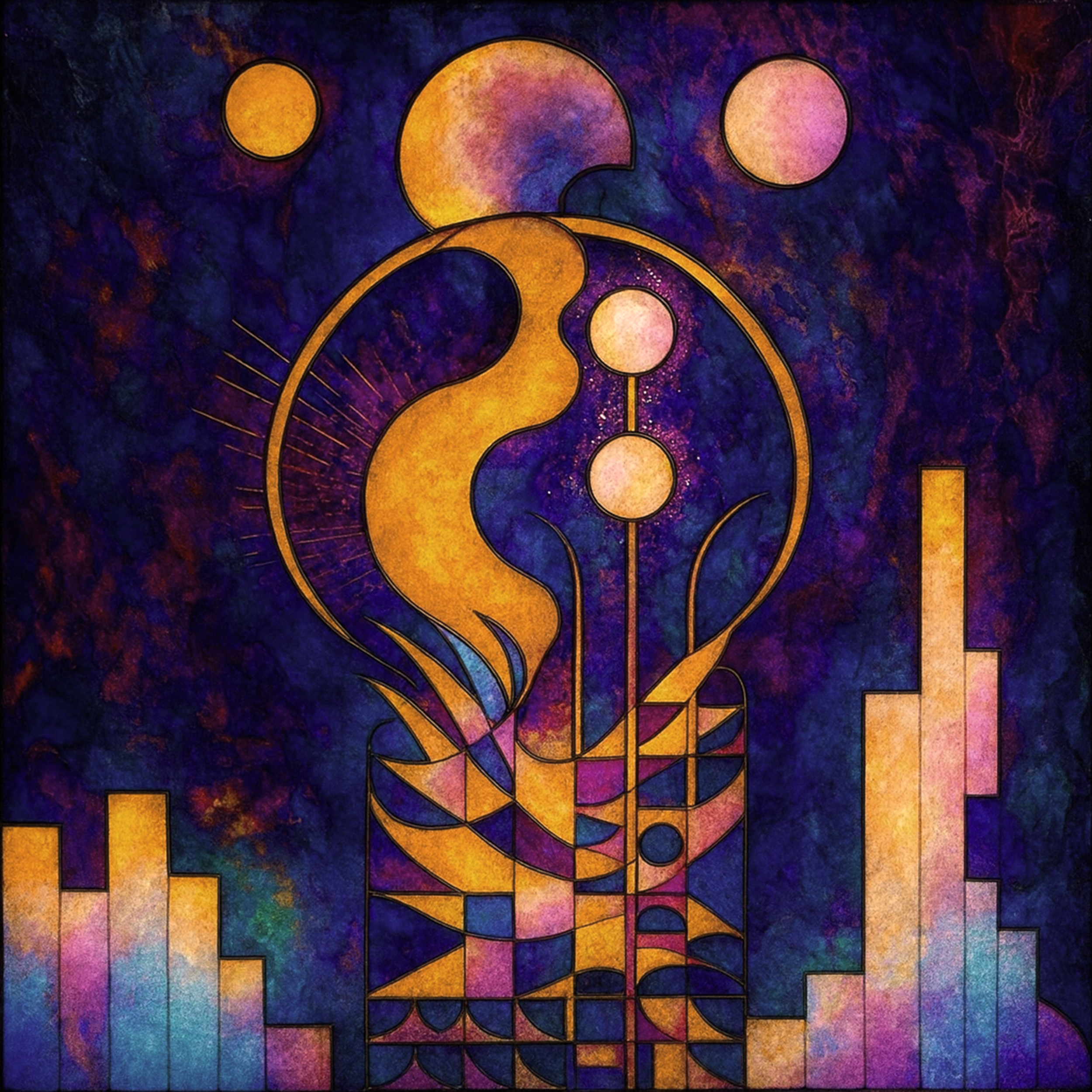
Primary Seed: "Equanimity" aligns with the Sage archetype, representing the calm, balanced presence that allows for deep wisdom and understanding. In this artwork, the figure sitting in meditation at the center of a symmetrical pathway embodies the Sage’s essence of equanimity—a serene focus amidst a structured, orderly environment that fosters clarity and insight.
In The Sage, equanimity is depicted through the calm, composed posture of the seated figure, surrounded by tall, geometric pillars that rise on either side. This symmetrical and orderly setting reflects the Sage’s inner balance, a state achieved through discipline and self-reflection. The pillars frame the figure, creating a sanctuary-like space that symbolizes mental and spiritual alignment, reinforcing the sense of stability that equanimity provides.
The pathway leading up to the figure, composed of alternating patterns and tones, suggests the journey toward wisdom and the steps required to attain a state of inner peace. Each section of the path symbolizes stages of learning and understanding, underscoring the Sage’s commitment to continuous growth and contemplation. This progression toward the figure evokes the discipline necessary to achieve equanimity, highlighting that this state is the result of careful and thoughtful practice.
Above the figure are two circular symbols, perhaps representing celestial bodies, hinting at the Sage’s connection to universal truths and cosmic order. This alignment with higher principles embodies the archetype’s pursuit of truth and knowledge, suggesting that equanimity is not only an inner quality but also a harmonious relationship with the larger universe.
The contrasting light and dark areas around the figure reflect the Sage’s ability to remain centered despite the dualities of life. The vast, star-studded background implies that the Sage’s mind transcends earthly concerns, reaching into the infinite, where equanimity allows them to observe without attachment or disturbance.
Through these elements, The Sage captures equanimity as the defining quality of the archetype, illustrating the calm, centered awareness that allows the Sage to perceive truth without bias. This artwork demonstrates the Sage’s role in embodying wisdom, showing that equanimity is both a state of mind and a way of engaging with the world, fostering clarity, insight, and profound understanding.
For Kayle
Description of the Sage
The Sage embodies the pursuit of profound knowledge, wisdom, and understanding. As a guiding figure, they seek to uncover the truths beneath the surface of life, exploring deeper meanings and principles that govern existence. By offering clarity and enlightenment to those seeking their counsel, The Sage helps others see beyond the superficial and understand the profound. However, their wisdom often sets them apart from others, leading to a solitary path.
The Sage represents the archetype of wisdom, embodying the qualities of clarity, reflection, and deep understanding. Their quest for knowledge leads them to explore the deeper meanings of life, often through solitude and contemplation. As a mentor and guide, The Sage shares their insights to help others on their journeys, yet this role can also lead to emotional detachment or isolation. The burden of responsibility weighs heavily on The Sage, as their role is not just to know but to teach, guiding others toward enlightenment. In this dual role, The Sage must balance their thirst for knowledge with the need to remain connected to those they inspire.
Characteristics of the Sage
Clarity: Embodies the ability to perceive truth and grasp the deeper meanings of existence. For the Sage, achieving clarity is akin to enlightenment, seeing beyond surface-level distractions to the essence of things.
Reflection:Involves deep contemplation and thoughtful analysis. The Sage often engages in reflection to gain self-awareness, uncover hidden insights, and arrive at a more profound understanding of life’s mysteries.
Wisdom: Represents profound knowledge and deep understanding. The Sage guides themselves and others with insight, using their accumulated wisdom to illuminate complex truths and navigate life’s challenges.
Challenges Faced by The Sage
Burden: The weight of knowledge and the responsibility to guide others can become overwhelming for the Sage, leading to stress, exhaustion, or a sense of obligation that dims their inner light.
Detachment: The Sage’s pursuit of wisdom often requires solitude, which can result in physical or emotional isolation, separating them from social interactions and personal connections.
Isolation: The tendency to become too directive or controlling, potentially stifling the mentee’s own decision-making abilities and hindering their personal growth.
Dreaming of The Sage
Isolation and Detachment: A dream featuring the Sage might point to feelings of loneliness or emotional disconnection, suggesting that the dreamer’s focus on knowledge or contemplation has distanced them from others, signaling a need for reconnection.
Quest for Knowledge: Seeing a Sage in a dream often reflects a deep desire for understanding or a journey towards greater wisdom, symbolizing the dreamer’s intellectual and spiritual growth.
Reflection and Contemplation: When the Sage appears in dreams, it may indicate the need for self-reflection, highlighting a focus on introspection and personal discovery.
Symbolic Imagery Associated with The Sage
Books and Scrolls: Symbolize the depth of the Mentor’s knowledge, representing their role as a source of wisdom and the transfer of information through teaching and storytelling.
Wells or Springs: Represent the depth of knowledge and the continuous search for understanding. Just as a well offers water to those who seek it, the Sage provides wisdom to those who thirst for knowledge.
Symbols of the Mind: Imagery such as the open eye, a geometric pattern, or a labyrinth can symbolize the Sage’s analytical thought process and mental clarity. These symbols suggest a focus on logic, awareness, and deep contemplation.
Cultural References Aligned with The Sage
Year: ~4th Century BCE
Title: Phaedo
Author: Plato
Quote: "The unexamined life is not worth living."
Explanation: Socrates exemplifies the Sage archetype through his relentless pursuit of truth and wisdom. In Phaedo, he urges people to examine their lives critically, emphasizing reflection and the importance of self-awareness. His approach highlights the Sage’s belief in enlightenment through introspection and the quest for deeper understanding, even at the cost of personal safety.
Year: ~4th century BCE
Title: The Analects
Author: Confucius
Quote: “Real knowledge is to know the extent of one’s ignorance.”
Explanation: Confucius represents the Sage archetype with his pursuit of wisdom and teaching others. The quote reflects humility and the continuous quest for understanding. The Sage values knowledge and seeks enlightenment, guiding others on their path.
Year: ~14th Century
Title: The Divine Comedy: Paradiso
Author: Dante Alighieri
Quote: "The mind is not a vessel to be filled but a fire to be kindled."
Explanation: Beatrice, as Dante’s guide through Paradiso, embodies the Sage archetype by leading him to enlightenment. Her guidance helps Dante move beyond mere knowledge toward a deeper spiritual understanding. This quote reflects the Sage’s focus on igniting curiosity and inner transformation, inspiring others to seek knowledge and wisdom through experience.
